

Spokane Soccer Academy Newsletter Article - Copyright © 2026 Kevin Moon
Best when read on a computer, the phone screen is too small and formatting is impacted.
Are Biases Appropriate for Coaches to Have?
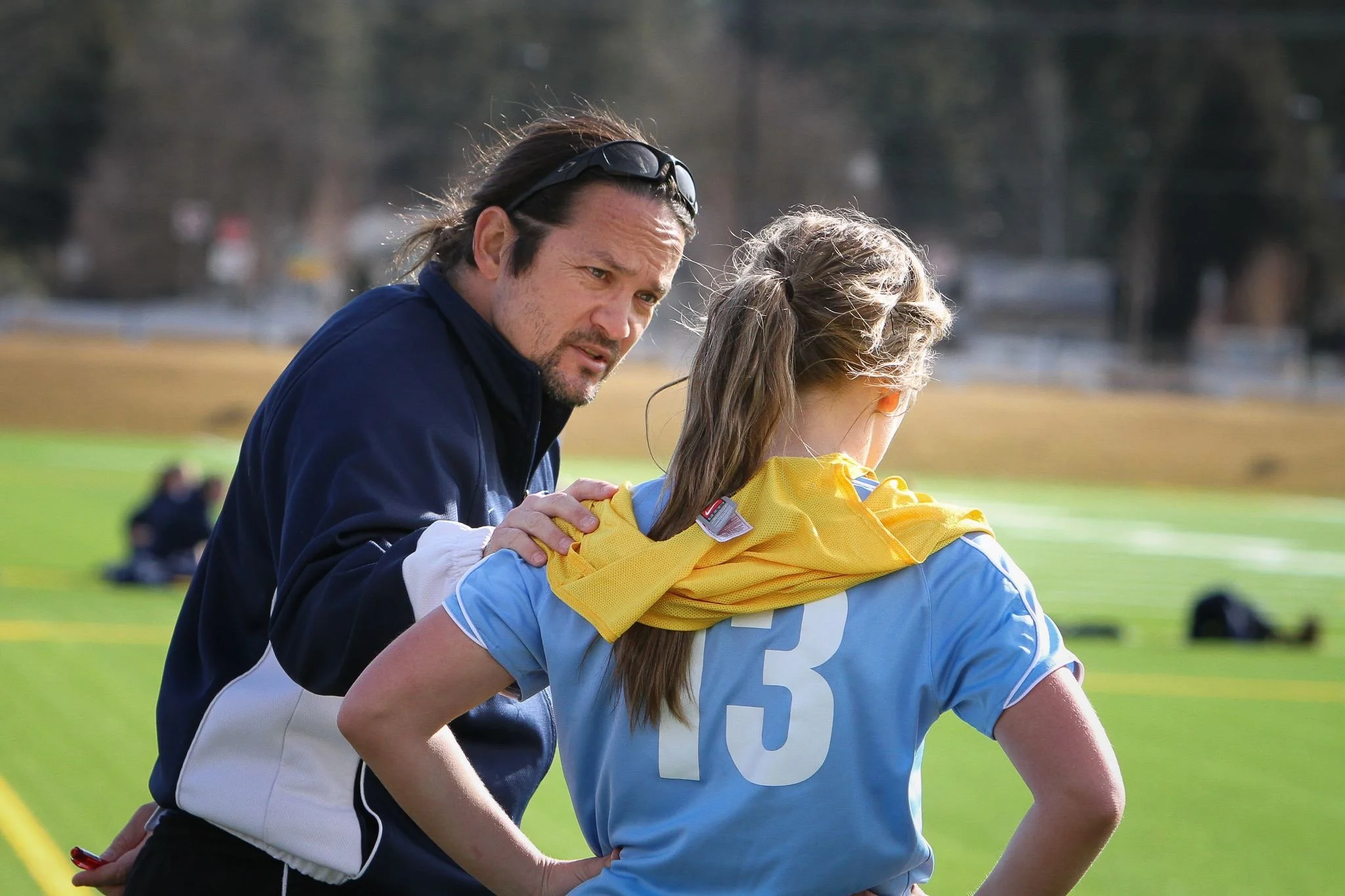
What formulates the biases a coach may develop about a player - and how players influence that process over time.
By Kevin Moon | March 12, 2026
Key idea: A coach's perception is rarely formed in a single moment. It is built through repeated observations of commitment, execution, coachability, and reliability over time.
Introduction
In coaching, the word bias is often treated as if it automatically means favoritism, unfairness, or a decision made without substance. In reality, that is not how most coaching bias is formed. In a healthy environment, a coach's bias is usually the product of repeated observation. Coaches watch players train, compete, respond to adversity, take instruction, recover from mistakes, and carry themselves around the team. Those observations accumulate. Over time, patterns emerge, and those patterns shape trust.
That trust - or lack of trust - is what many players eventually perceive as bias. The important point is that this perception is usually not created in one isolated event. It is developed gradually. A coach may remember a mistake, but one mistake alone rarely defines a player. What defines a player in the coach's mind is the pattern that surrounds the mistake: how often it happens, what the player's response looks like afterward, and whether the player consistently shows the habits needed to improve.
For players, this should be empowering rather than discouraging. It means they have significant influence over how they are viewed. Their habits, discipline, focus, and execution continually contribute to the picture a coach develops. In other words, players have more power than they think in shaping a coach's perspective on who they are and what they are capable of.
Are coaching biases appropriate?
Biases are appropriate for coaches when they are grounded in real evidence, consistent standards, and repeated patterns of behavior. A coach has to make decisions about selection, leadership, match responsibilities, substitutions, tactical trust, and who can handle pressure. Those decisions cannot be made randomly. They must be informed by what the coach has repeatedly seen.
Bias becomes a problem when it is arbitrary, emotional, inconsistent, or disconnected from what the player is actually doing. But when it grows from reliable observation, bias is not the enemy of fairness. It is often the practical result of accountability. Coaches are constantly asking: Who will carry out the game plan? Who will remain disciplined when the match gets chaotic? Who can absorb correction and adjust? Who can be trusted with extra responsibility? The answers to those questions become the foundation of coaching bias.
Positions have jobs - but the player's job is bigger than the position
Every position on the field has responsibilities that must be executed. A center back has to defend space, organize the line, win duels, and manage timing. A holding midfielder must connect play, protect central areas, and provide balance. A forward may need to stretch the back line, trigger the press, and create threats in transition. These are the baseline duties of the role.
But positionally assigned tasks are only part of a player's overall job. A coach is not evaluating a player only by whether the player knows where to stand on the field. Coaches also evaluate preparation, concentration, communication, professionalism, body language, response to instruction, competitiveness, emotional steadiness, and consistency. A player might understand the position but still damage trust through careless habits, poor response to feedback, or lack of tactical concentration. This is one reason players sometimes misunderstand how they are being judged. They may believe they are being evaluated only on visible actions in the game, while the coach is evaluating the full picture. The full picture matters because the full picture determines whether the player can be relied upon when responsibility increases.
Individual roles change from opponent to opponent
In addition to positional responsibilities, coaches often assign individual instructions that extend beyond the standard role. A player may be told to landmark a dangerous opponent, stay higher in transition, press a particular defender on a cue, tuck inside earlier, delay rather than tackle, or track a runner in a very specific zone. These instructions can change from one opponent to the next, and even from one phase of the same match to another
That matters because coaches are not only assessing whether a player knows the general position. They are assessing whether the player can carry out a customized game plan. When a player consistently follows these details, the coach begins to trust that player with more nuanced assignments. When a player repeatedly forgets them, ignores them, or improvises outside the plan, the coach begins to hesitate. This hesitation becomes part of the bias that player later feels.
What formulates a coach's bias over time
Commitment is often the first layer. Players who arrive ready, stay engaged, take training seriously, and show intentional habits around preparation and recovery quickly create a positive impression. Coaches notice who treats each day as meaningful and who treats parts of the process casually.
Performance is another layer, but not just highlight performance. Coaches value repeatable performance: a player who can consistently execute simple actions, follow the tactical plan, and perform under pressure. One spectacular moment does not erase repeated unreliability, just as one poor moment does not cancel steady consistency.
Tactical discipline matters because soccer is collective. Players who consistently maintain structure, interpret cues correctly, and carry out team tasks help the team function. Players who chase the game emotionally, abandon structure, or ignore details create instability. Over time, coaches remember which category a player most often falls into.
Attitude and coachability shape bias as well. When corrected, does the player listen, absorb, and respond? Or does the player become defensive, withdrawn, or dismissive? Coaches do not simply evaluate ability; they evaluate the player's relationship with improvement. A coachable player is easier to trust because correction leads somewhere productive.
Leadership is usually an outcome of all of the above. Leadership is not just talking. It is evidence that a player can carry responsibility without compromising standards. Coaches tend to give leadership roles to players whose habits, performance, and emotional steadiness have already earned trust.
How positive, neutral, and negative bias typically form
A positive bias usually develops when a player repeatedly demonstrates reliability. The player trains with intent, responds well to feedback, handles tactical detail, competes honestly, and can be counted on when pressure rises. Coaches begin to expect good decisions and responsible behavior from that player, so more trust and opportunity follow.
A middle-of-the-road bias forms when a player shows enough to stay in consideration but not enough to become indispensable. The player may do certain things well, but inconsistently. Training may be solid one week and ordinary the next. Tactical execution may be acceptable, but not sharp. Coaches neither fully distrust nor fully lean on that player. As a result, the player's role often feels unstable.
A negative bias develops when the same unhelpful patterns appear again and again. It may be recurring lapses in concentration, repeated failure to carry out instructions, inconsistent effort, poor response to correction, or habits that suggest the player cannot be fully trusted in demanding moments. By the time a player strongly feels this bias, it has usually been built by repetition rather than by a single judgment.
When players are trusted - and when they are not
A coach may give extra responsibility to one player and not to another, and from the outside that can look personal. In most cases it is not personal at all. It is simply a reflection of trust. Extra tactical responsibility, leadership opportunities, difficult defensive assignments, set- piece roles, and freedom within the game are generally earned through repeated evidence that the player can handle them.
On the other hand, when a coach does not trust a player, that player often receives less autonomy and fewer extra responsibilities. The coach may keep instructions simpler, reduce exposure in key moments, or hesitate to rely on the player in volatile situations. This can feel frustrating to the player, but it usually reflects what the coach believes the player has shown repeatedly.
The most important truth for players
Players are not powerless in this process. Every training session, every response to coaching, every tactical detail honored or ignored, every act of discipline or indiscipline contributes to the coach's perception. Players influence bias through the standards they keep when no one is applauding, through the way they handle correction, and through the consistency with whichmthey carry out their role.
This means a player can also change a coach's bias. Not through one speech or one emotional reaction, but through sustained proof. When better habits are repeated long enough, perception changes. When sharper concentration becomes normal, perception changes. When a player becomes more reliable and more accountable over time, the bias that once limited trust can be replaced by a new one built on evidence.
Conclusion
Coaches do not typically wake up and randomly decide who they trust and who they do not. That trust is built or weakened over time. Bias, in the coaching sense, is often the natural result of repeated observations of commitment, execution, discipline, coachability, and leadership.
For players, the lesson is clear: if you want a coach to see you differently, give that coach a different body of evidence. Your habits shape your opportunities. Your consistency shapes your trust. And the perspective a coach develops about you is very often a reflection of what you have repeatedly shown.
Part Two of this article revolves around what players can do to manage a coach’s bias. To get that part you have to register for the newsletter. There is a link at the top and bottom of the page. We will be writing and publishing more articles every 4-6 weeks. Don’t miss out!
Spokane Soccer Academy Newsletter Article - Copyright © 2026 Kevin Moon